July 2020

The Body Has No Edge, [glass, mirror, stones, dirt, grass, plastic, screws, copper, wire, circuit board, aluminium, plastic, hand welded steel, dimensions variable].
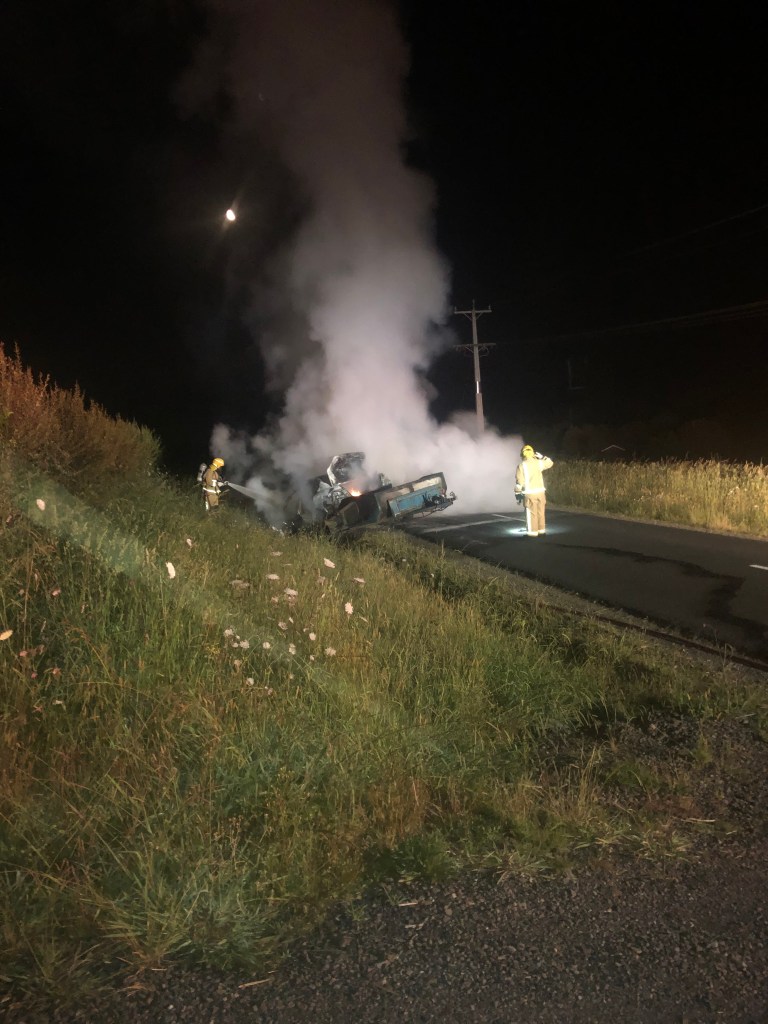
My first connection to this material was in December last year in the middle of the night. I phoned the police as I witnessed a fire and explosion not far from my house. My husband went to investigate and said a stolen car had been set alight.
Five months later during a lockdown walk, I encountered the remnants on the roadside. When I took a closer look something about them enchanted me. Enchantment is a moment that has an affect which causes me to care. Often I’m not sure why these things matter, so my practice has become a way to examine what matters and how it comes to matter.
The indeterminate forces of heat and a powerful explosion have blown apart, melted and forced together this material, colliding to create new, unfamiliar forms.
Matter makes itself intelligible by the marks it leaves on other bodies. Human and non-human bodies have no edges, but are porous and malleable, shaped by and shaping each other as matter and meaning are mutually articulated.
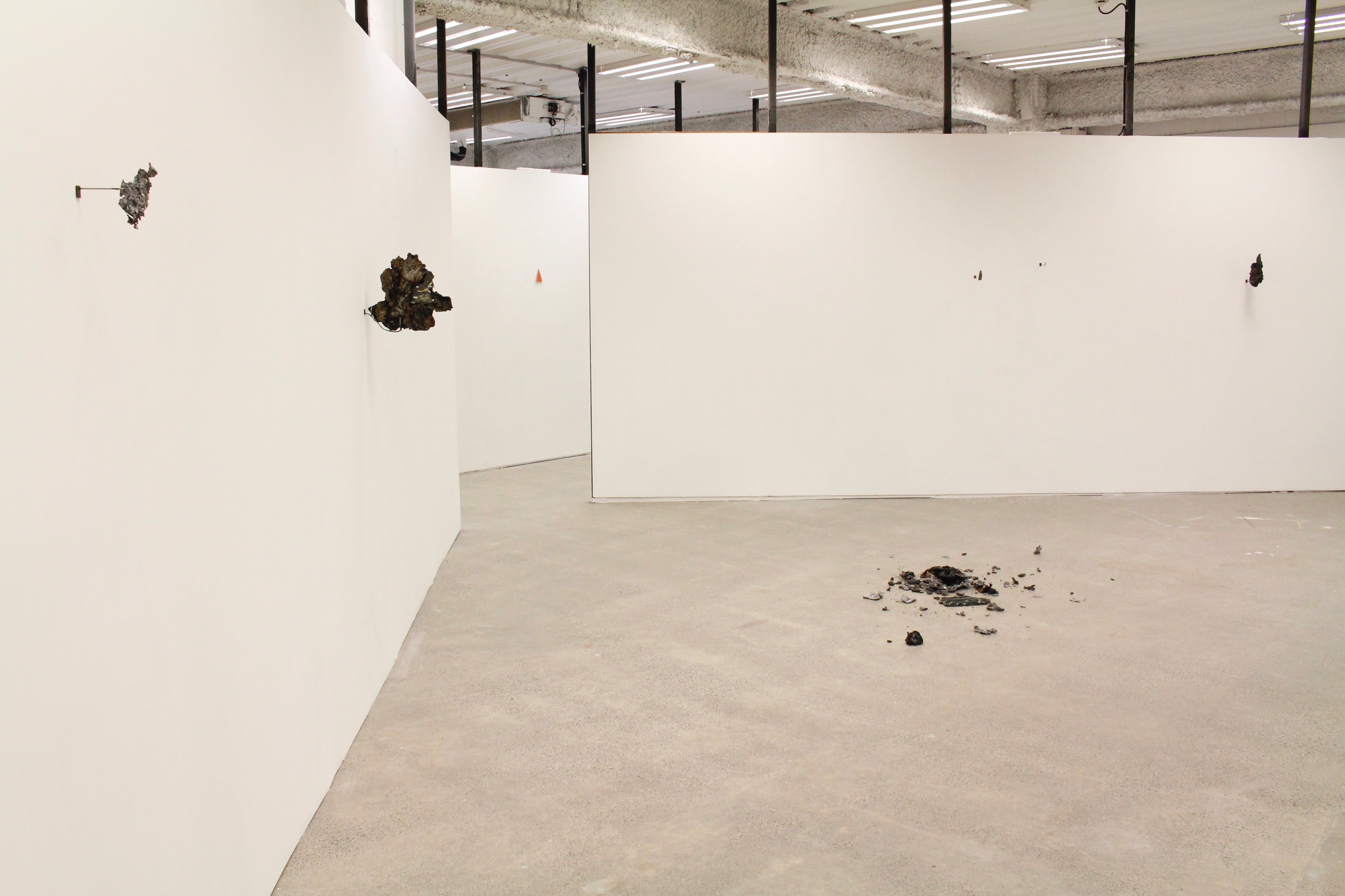

Installed on hand-welded steel supports extend these found sculptures out at right angles from the wall. This method of display enables the finer details of these found sculptures to be seen, from a position which appreciates all perspectives, having no front back, right or wrong side. My inspiration for these came from looking closely at how valuable artefacts are displayed in museums using delicate, specifically tailored and discrete supports which both elevate and honour these objects.


Research is a vital part of my process. I research the site and interview people. I am interested in hearing perspectives beyond my own, as this contributes to broaden my knowledge and offers logic to installation decisions and my treatment of the material.


Research for this work led me to interview police, who said “these remains have no evidential value unless it was a serious crime”. A forensic scientist told me that “a forensic investigation is based on scientific evidence, not influenced by opinion. Every contact leaves a trace, we look for transfers or evidence a suspect has bought to or taken from the scene, the transfer or trace evidence can tell a story.”
It interested me how both of these professions used legal terminology placing them at an objective distance. Contrary to Karen Barad and Jane Bennet’s new materialist view that it is impossible to hold oneself apart from the matter you wish to observe.
My aim is to provide a space to find these forms as directly as possible, to animate them in some way.
It is never just about the objects but the stories they carry.

 Mel Arnold